The Calls
A Guide to the City's Riverside Quarter
All about The Calls
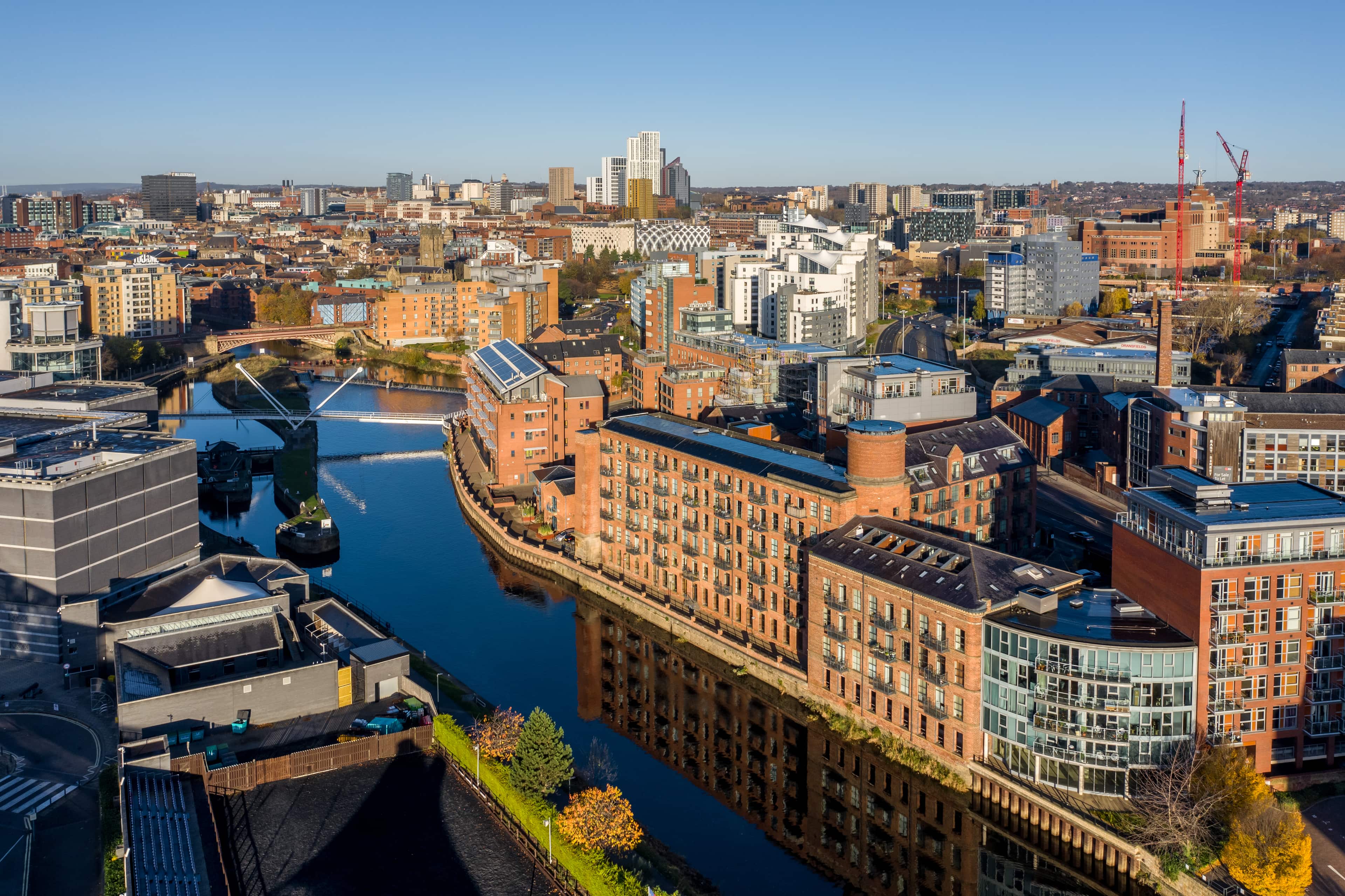
If you're looking at student accommodation in Leeds city centre, The Calls is the riverside pocket you'll keep coming back to. It sits on the River Aire between Leeds Bridge and Crown Point, five minutes from Call Lane, ten minutes from Leeds station, and about twenty-five from campus. Converted warehouses, a riverside walkway, and some of the best nightlife in the North on your doorstep.
Here's what it's actually like to live there as a student.
Where is The Calls?
The Calls is a street and a small district on the north bank of the River Aire in Leeds city centre, LS2. It runs east from Leeds Bridge towards Crown Point Bridge, with Call Lane heading north from it towards the Corn Exchange and Kirkgate Market.
Directly opposite, on the south bank, is Brewery Wharf — and beyond that, the rapidly growing South Bank district with the new Aire Park at its centre.
It's small. You can walk the whole thing in ten minutes. That's part of the appeal.
How far is The Calls from the universities?
Walking times from The Calls:
Destination | Approximate walk |
|---|---|
Leeds City College / Leeds Conservatoire (Quarry Hill) | 10 minutes |
Leeds station | 8–10 minutes |
Leeds Beckett City Campus | 20–25 minutes |
University of Leeds main campus | 20–25 minutes |
Leeds Arts University (Blenheim Walk) | 25–30 minutes |
Leeds Trinity University (Horsforth) | Train or bus — allow 40 minutes |
If you're at the Conservatoire, Leeds City College or Northern School of Contemporary Dance, The Calls is one of the closest places in the city you can live. If you're at Leeds or Beckett, it's a walkable but real commute — most people either walk it in twenty-odd minutes or hop on a bus from Vicar Lane or Boar Lane up Woodhouse Lane.
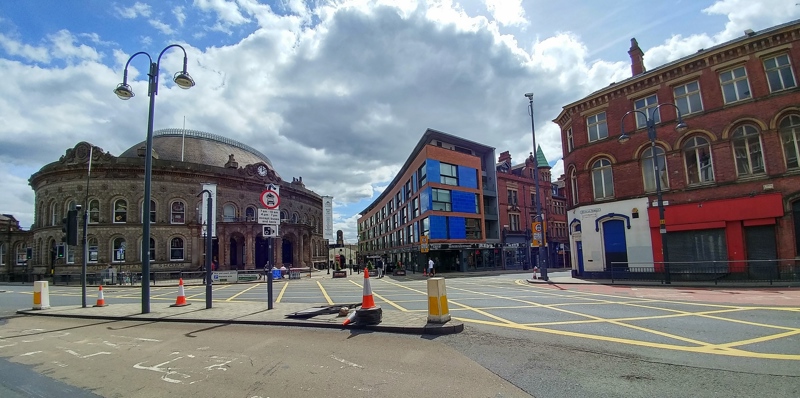
Call Lane and the Exchange Quarter
Call Lane is the reason a lot of students know this area at all. It's one of the most famous nights out in the country, and it's genuinely walkable from your front door rather than a taxi home at 3am.
What's on it:
Cocktail bars, including a few speakeasy-style places behind unmarked doors
Tiki bars, Mexican cantinas and late-night dives — several with 4am licences
Indie and alternative venues where the music is loud and the tables occasionally get danced on
Craft beer taprooms and riverside terraces along The Calls itself
Head north and you're in the Exchange Quarter — the Corn Exchange, vintage shops, independent coffee, Kirkgate Market. Head west and you're ten minutes from Greek Street and Merrion Street. The bigger clubs — Wire, Mint Warehouse, Beaverworks — are all within walking distance too.
If nightlife ranks high on your list, almost nowhere in Leeds beats this location.
The waterfront
The riverside walkway runs along both banks and is the thing that stops The Calls feeling like just another block of city centre flats.
Riverside walk: Follow it east to Leeds Dock and the Royal Armouries (free entry), or west to Granary Wharf and the station arches.
Leeds Dock water taxi: Cheap, frequent, and a much better commute than it has any right to be.
Aire Park: Opened on the former Tetley's Brewery site across the river — the largest new city centre green space in the UK, and the closest thing to a park you'll get without heading to Hyde Park or Roundhay.
Brewery Wharf: The south bank development opposite, with riverside pubs, cafés, a Sainsbury's Local and a decent amount of outdoor seating. The Brewery Wharf Tavern's terrace is one of the few proper waterside pub gardens in the city.
Everyday practicalities
Food shopping. Kirkgate Market is a five-minute walk and one of the largest covered markets in the UK — fruit, veg, fish and meat for a fraction of supermarket prices. There's a Sainsbury's Local at Brewery Wharf, a Tesco on Boar Lane, and a big Morrisons at Merrion Centre.
Gyms and study space. The Leeds Central Library and city centre campus libraries are within walking distance, and most purpose-built blocks in the area include study rooms and a gym.
Transport. You almost certainly don't need a car — parking is limited, pay-and-display and expensive. Leeds station gets you to Manchester in under an hour, York in twenty-five minutes and London in just over two. Bus stops on Vicar Lane, Boar Lane and Duncan Street cover most of the city.
Safety. It's a busy, well-lit, well-populated part of the city centre with a strong late-night presence, though standard city centre sense applies on nights out.
What does it cost?
City centre Leeds is more expensive than Hyde Park or Headingley. As a rough guide, purpose-built student accommodation in and around the city centre typically runs from around £150 per week at the lower end up to £280+ for premium studios, usually with bills, Wi-Fi and contents insurance included. Shared flats and warehouse conversions in The Calls itself vary widely.
Weigh that against what you save on buses and taxis, and it's closer than the headline numbers suggest.
The Calls vs Hyde Park vs Headingley
Hyde Park — cheapest, biggest student community, closest to the University of Leeds campus, classic shared terraced houses. Less polished.
Headingley — the traditional student pub strip and the start of the Otley Run, good for second and third years who want a house and a bit of space. Further out.
The Calls / city centre — most expensive, best nightlife access, best transport, more studios and modern flats than shared houses. Fewer students per square metre, so a slightly different social feel.
If you want to be in the middle of the city rather than in a student bubble, The Calls wins.
The honest downsides
It's loud. Flats directly above or beside Call Lane will hear it at weekends. Riverside streets are noticeably quieter — worth asking about when you view.
It's not a student area. You'll be living alongside professionals, families and a lot of office workers. That's a plus for some people and a negative for others.
The campus walk is real. Twenty-five minutes each way in January rain adds up.
Fewer big shared houses. If you want six of you under one roof, you'll struggle here.
A quick bit of history (it's a good one)
The Calls has been on the map since at least the 1500s. It's thought to take its name from the shouts and calls of dockworkers loading barges along the river. Through the Industrial Revolution it was a working dockside — warehouses, corn mills and leather works serving the Leeds textile trade, with barges running west to Liverpool and east to the North Sea.
By the mid-twentieth century the industry had gone, the river was badly polluted and the buildings were soot-blackened and derelict. The regeneration started in the 1980s: rather than demolishing the warehouses, developers converted them. That's why your flat might have exposed brick, iron beams and a window where a loading bay used to be.
The river's clean enough now that herons and kingfishers are a regular sight along it.